
Pacal "DJ Pain 1" Bayley
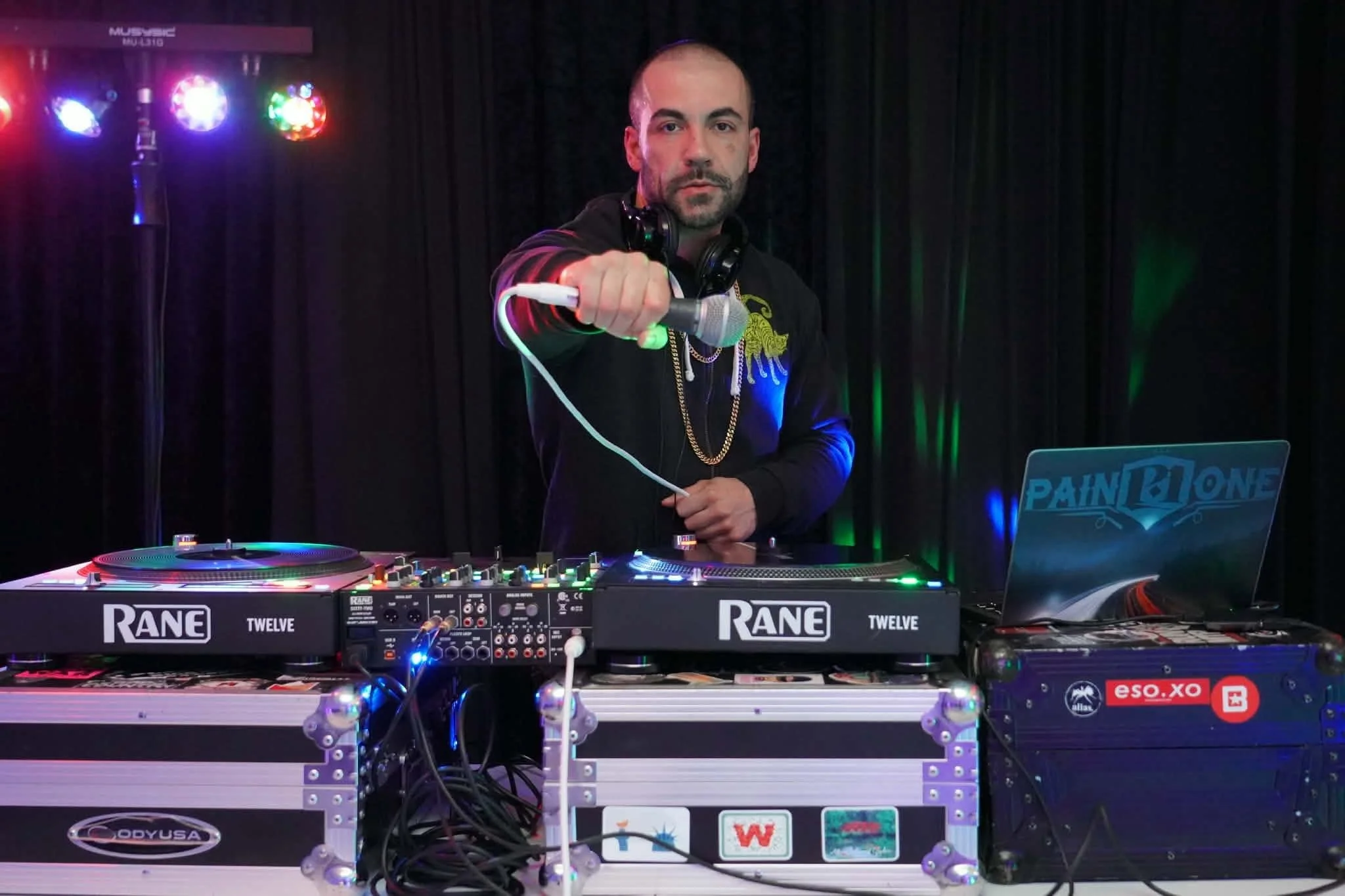
DJ Pain 1 (Pacal Bayley) is a Madison-based record producer, DJ, educator, and longtime contributor to the city’s Hip-Hop community. He began producing beats as a teenager and has built an international career working with artists including Young Jeezy, 50 Cent, Ludacris, Rick Ross, Public Enemy, Lil Baby, Nipsey Hussle, and others. His production on Young Jeezy’s The Recession earned an RIAA Platinum certification, and he has since earned multiple platinum and multi-platinum credits.
Beyond his work as a producer and DJ, Pain 1 has played an important role in supporting and educating emerging artists. He is a co-founder of the Urban Community Arts Network (UCAN), where he has helped advance opportunities for artists, producers, and creatives in Madison’s Hip-Hop and broader arts communities. Through workshops, mentorship, and music education, he shares his knowledge of production, entrepreneurship, and navigating the music industry while helping strengthen the local creative ecosystem. A Madison native, DJ Pain 1 brings decades of experience in Hip-Hop, the music industry, and community-building to his work with artists and the next generation of creatives.
In-Person | PM Session 1
1:00 PM - 2:30 PM
-
Facilitated By: Karen Reece, Rob "Rob Dz" Franklin, and Pacal "DJ Pain 1" Bayley
Audience: Open to Everyone
Arts and culture shape a city's image. Who gets included, and who gets left out, is never an accident. Plans and visions for an inclusive creative community are easy to write. In this session, we'll show you what it actually takes to build one from the ground up with the artists and community members already doing the work.
This session speaks directly to the summit's pillars of Abolition, by dismantling extractive practices, and Solidarity, by working toward shared power and mutual accountability for Madison's music scene. We'll open with a live DJ and emcee set giving a look at Hip-Hop's roots in mutual aid and collaborative culture-building, then discuss why the genre still gets misread as risk instead of recognized as infrastructure. From there we turn to Greater Madison Music City, UCAN's own effort to grow an equitable, community-built music economy in Madison, and what it takes to protect that kind of work once it becomes valuable enough for other people to want a piece of it. We'll talk about who gets credit, who gets a seat at the table, and what changes when the people who built something hold onto their own story. We ground the conversation in research, including the City of Madison's Task Force on Equity in Music and Entertainment and independent economic impact analysis of the local music scene.Aims of the session:
To understand how racial bias in arts and culture shapes economic opportunity for artists and the broader cultural identity of a city
To examine what happens when a community-built effort like Greater Madison Music City becomes something an institution wants to formalize, brand, or take credit for
To learn the mechanisms UCAN uses to hold onto its own story and keep driving systems change in Madison's arts economy